Managing Property in Chicago vs. The Suburbs: 5 Crucial Differences Landlords Need to Know
The 30-mile radius around Lake Michigan produces some of the best rental income in the Midwest. Experienced investors will tell you that. But they'll also tell you that a three-flat in Lincoln Park operates nothing like a single-family in Naperville or a duplex in Evanston. The numbers might look similar on paper. The day-to-day reality couldn't be more different.
Cross the city limits and you're not just in a new neighborhood. You're in a different legal, operational, and financial ecosystem. Managing both sides of that line well takes local knowledge that most generalist property managers don't have. Here are five things that catch landlords off guard.
1. Navigating the Chicago RLTO vs. The Cook County RTLO
City landlords have a long, painful history with the Chicago Residential Landlord and Tenant Ordinance. The RLTO is tenant-friendly by design. A single minor mistake like failing to attach the exact, updated RLTO summary to a lease, or miscalculating the interest owed on a security deposit by a few cents, can trigger lawsuits, statutory fines, and attorney fee awards. Plenty of city property managers have abandoned security deposits entirely and moved to non-refundable move-in fees just to stay out of trouble.
The suburbs used to be much more lenient. That shifted when Cook County introduced its own Residential Tenant Landlord Ordinance (RTLO), which now covers suburban Cook County municipalities unless a suburb opted out or already had its own stricter rules in place (Evanston, for example).
A property in Chicago follows the RLTO. A property in Oak Park or Skokie falls under the RTLO, which copies a lot of the city's requirements around security deposits and lease disclosures. Head further out into DuPage, Lake, or Will County and local ordinances are generally more balanced, giving you more flexibility with standard lease terms and deposit management.
2. Eviction Timelines and Legal Hurdles
Nobody goes into landlording expecting to file evictions, but understanding the timeline matters for how you price risk. In Chicago, a contested eviction for non-payment can drag on six months to a year. The Cook County court docket is heavy, and tenant advocacy organizations are a consistent presence in city courtrooms. By the time it's over, you could be looking at thousands in lost rent and legal fees.
In the collar counties, the process moves faster. Courts in DuPage, Kane, and similar jurisdictions tend to apply the law more strictly on non-payment cases, and dockets are lighter. Cases that would take six months in the city sometimes resolve in a matter of weeks.
That gap is exactly why tenant screening in the city needs to be as thorough as possible. A bad placement in a city unit is significantly more expensive than a bad placement in a suburban one.
3. Splitting the Bill: Utility Metering and Disclosures
Most suburban rentals have separate utility meters. The tenant puts gas, electric, and sometimes water in their name, and the math is straightforward. Chicago's older housing stock complicates that arrangement considerably.
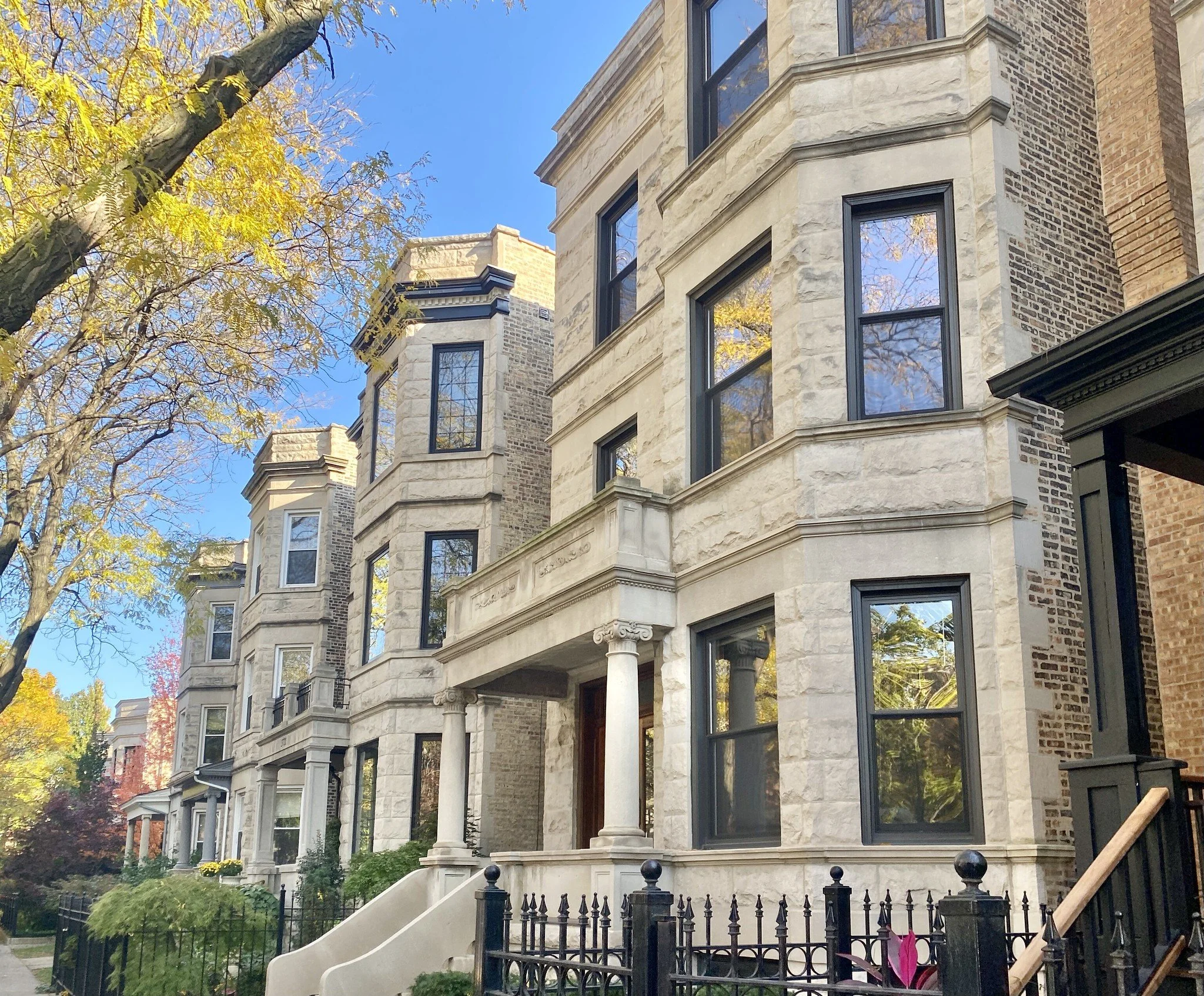
The city is full of vintage graystones, brick two-flats, and courtyard buildings built around shared boiler systems. A single boiler heating the entire building means a single meter, and you can't arbitrarily divide that cost among tenants. Illinois law requires specific utility disclosures when a tenant is paying for utilities that also service common areas or other units. Get it wrong and a tenant has legal grounds to withhold rent or pursue damages.
Buying vintage Chicago properties usually means absorbing the cost of radiator heat or water into the rent price and building that into your underwriting from the start. In the suburbs, you typically pass those costs to the tenant.
4. Parking vs. School Districts: What Renters Actually Value
The amenities that drive leasing decisions in the city are almost completely different from the ones that drive them in the suburbs.
In dense Chicago neighborhoods like Lakeview, Wicker Park, or Logan Square, parking is worth real money. A dedicated garage spot or off-street pad can add $150 to $300 per month to what a tenant will pay. Square footage becomes negotiable. Parking does not.
In the suburbs, parking is assumed. The real premium comes from school districts. Suburban renters tend to be families or couples planning ahead, and they'll pay more to land within the boundaries of strong school districts like those in Naperville, Hinsdale, or Glenview. That's not a soft preference. It shows up directly in occupancy rates and renewal rates.
Marketing a city unit without mentioning CTA access and parking, or marketing a suburban unit without leading with the school district, leaves money on the table.
5. Maintenance Realities: Old Buildings vs. HOA Bureaucracy
Chicago's older building stock needs specialized contractors. Tuckpointing, flat roofs, aging iron plumbing, 100-year-old masonry, these aren't jobs you hand off to a general handyman. You need vendors who actually understand historic city architecture. Add in the city permitting process for structural repairs and you've got a maintenance environment that can slow things down significantly if you don't have the right relationships in place.
Suburban properties are usually newer, which means more standard construction and fewer surprises. The complication there is HOAs and municipal code enforcement. A lot of suburban rentals sit inside HOA jurisdictions with rules that govern window blinds, trash can placement, and lawn height. Village inspectors can and do write fines. A property manager who doesn't know local compliance requirements will cost you.
City maintenance requires people who know old buildings. Suburban maintenance requires someone who knows how to navigate the village and stay ahead of HOA compliance.
The Bottom Line
The Chicago market and the suburban market each have real upside. They just don't operate the same way, and the mistakes you make by treating them like they do tend to be expensive ones. BCG Real Estate Group manages properties across Chicagoland, from the city proper out to the collar counties. Reach out and we can talk through what's actually involved in managing your portfolio well, wherever it sits.